
A new paper led by ESR’s Susan Howard shows that the NASA/CNES “SWOT” satellite, designed for surface water and ocean topography studies, can also measure changes in the Antarctic ice shelves.
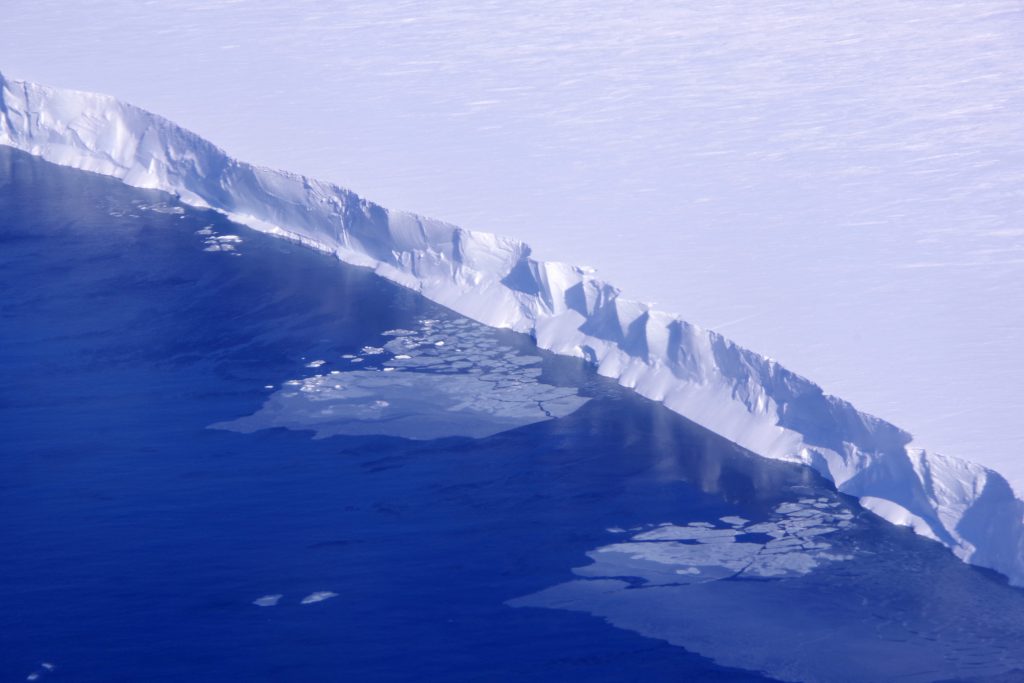
Antarctic ice shelves can act as brakes on ice loss from the massive Antarctic ice sheet. Understanding the processes that affect the ice shelves are critical to our understanding of potential sea level rise.
SWOT, which uses radar interferometry to measure swaths of surface height every 21 days regardless of clouds, can detect tidal flexure, monitor vertical ice shelf motion, and measure crevasse changes, helping us understand processes affecting ice shelf stability.
Check out the open access paper:
https://agupubs.onlinelibrary.wiley.com/doi/10.1029/2026GL122539
Citation:
Howard, S. L., Katz, Z. S., Padman, L., Siegfried, M. R., Abrahams, E., & Snow, T. M. (2026). SWOT high-rate raster data reveals Antarctic ice shelf motion and change in response to ocean and ice dynamics. Geophysical Research Letters, 53, e2026GL122539. https://doi.org/10.1029/2026GL122539